

Introduction
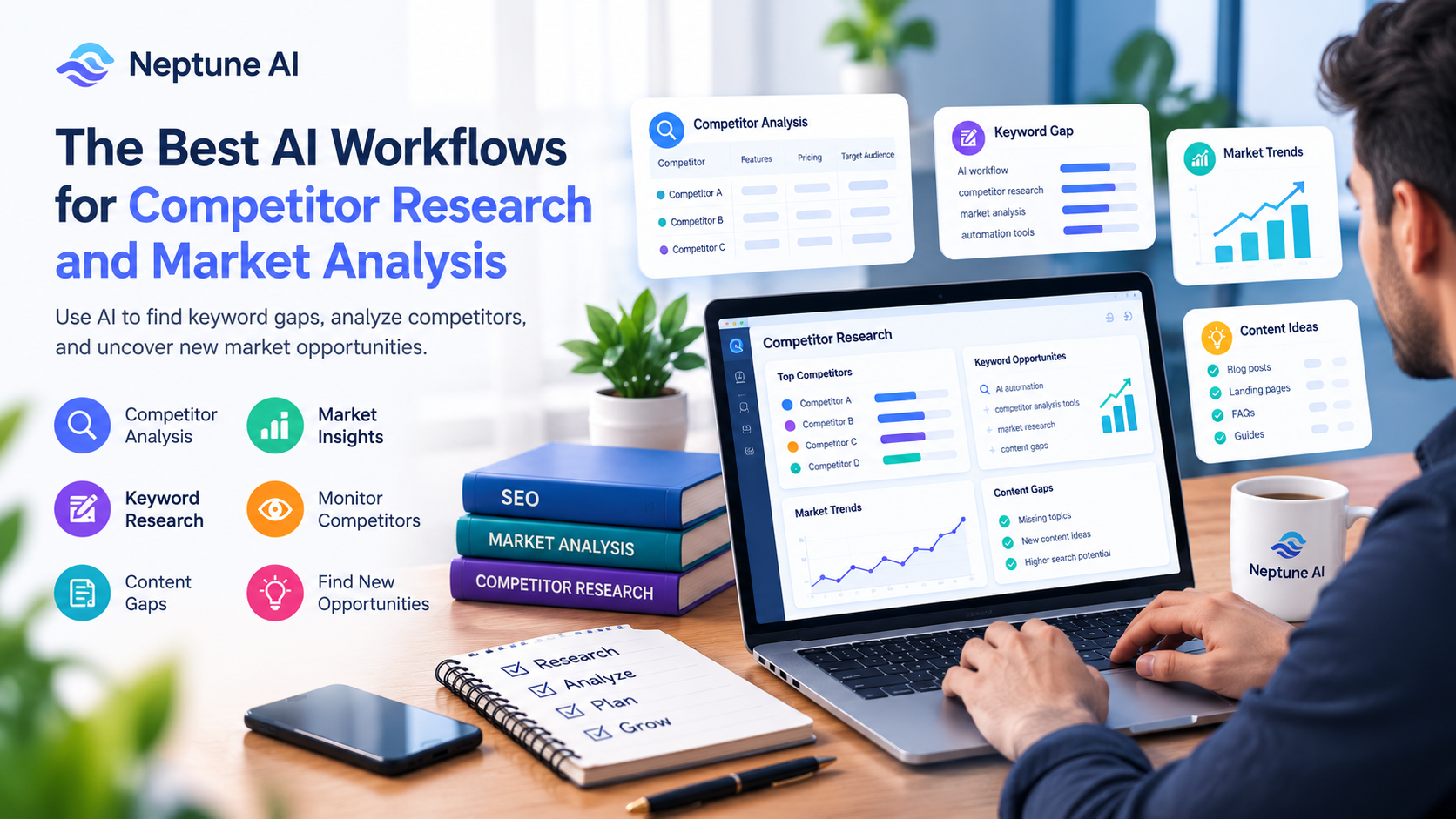
Understanding your competitors is essential for business growth. Companies need to know what their competitors offer, which keywords they target, what customers expect, and where new market opportunities exist. However, collecting and analyzing this information manually can take a lot of time.
AI workflows make competitor research faster and more organized. They help businesses collect information, analyze market trends, compare products, identify keyword gaps, and turn research into actionable insights.
With the right AI workflow, businesses can reduce repetitive tasks and make better decisions based on reliable data. In this guide, we will explore the best AI workflows for competitor research and market analysis, the tools that support them, and how to use them effectively.
Table of Contents
- What Is AI-Powered Competitor Research?
- Why Businesses Need AI Workflows for Market Analysis
- The Best AI Workflows for Competitor Research
- How AI Helps With Keyword Research and Content Gaps
- Best AI Tools for Competitor Research
- How to Build an Effective Competitor Research Workflow
- Common Mistakes to Avoid
- Frequently Asked Questions
- Final Thoughts
What Is AI-Powered Competitor Research?
AI-powered competitor research uses artificial intelligence to organize and analyze information about competing businesses. This information may include public websites, product features, pricing pages, customer reviews, search rankings, and marketing strategies.
Traditional competitor research often requires manually visiting multiple websites and recording findings in spreadsheets. AI workflows can simplify this process by summarizing information, comparing competitors, identifying patterns, and preparing reports.
For example, a software company can use AI to compare several competing products based on features, pricing, target audiences, and customer feedback. This information can help the company understand its position in the market and identify areas for improvement.
Why Businesses Need AI Workflows for Market Analysis
AI workflows help businesses conduct research more efficiently and consistently. Instead of spending hours collecting information, teams can focus on understanding the findings and making informed decisions.
Save Time on Research
AI can summarize lengthy reports, organize competitor information, and prepare structured comparisons. This reduces repetitive work and helps teams complete research more efficiently.
Identify Keyword Opportunities
Businesses can use AI to organize keyword lists, discover related search topics, and identify content gaps. These insights can support SEO strategies and help websites target relevant search queries.
Understand Customer Needs
Analyzing public customer reviews can reveal common complaints, product requests, and customer preferences. Businesses can use these findings to improve their products, services, and marketing messages.
Monitor Market Changes
Regular competitor monitoring helps businesses track changes in pricing, product features, content, and market positioning. These insights can help teams respond to new developments.
The Best AI Workflows for Competitor Research
Different research objectives require different workflows. The following approaches can help businesses gather useful information and turn it into practical recommendations.
1. Competitor Discovery Workflow
The first step in competitor research is identifying the businesses that compete for your customers and market share.
An AI workflow can help organize potential competitors based on their products, services, target audiences, and positioning.
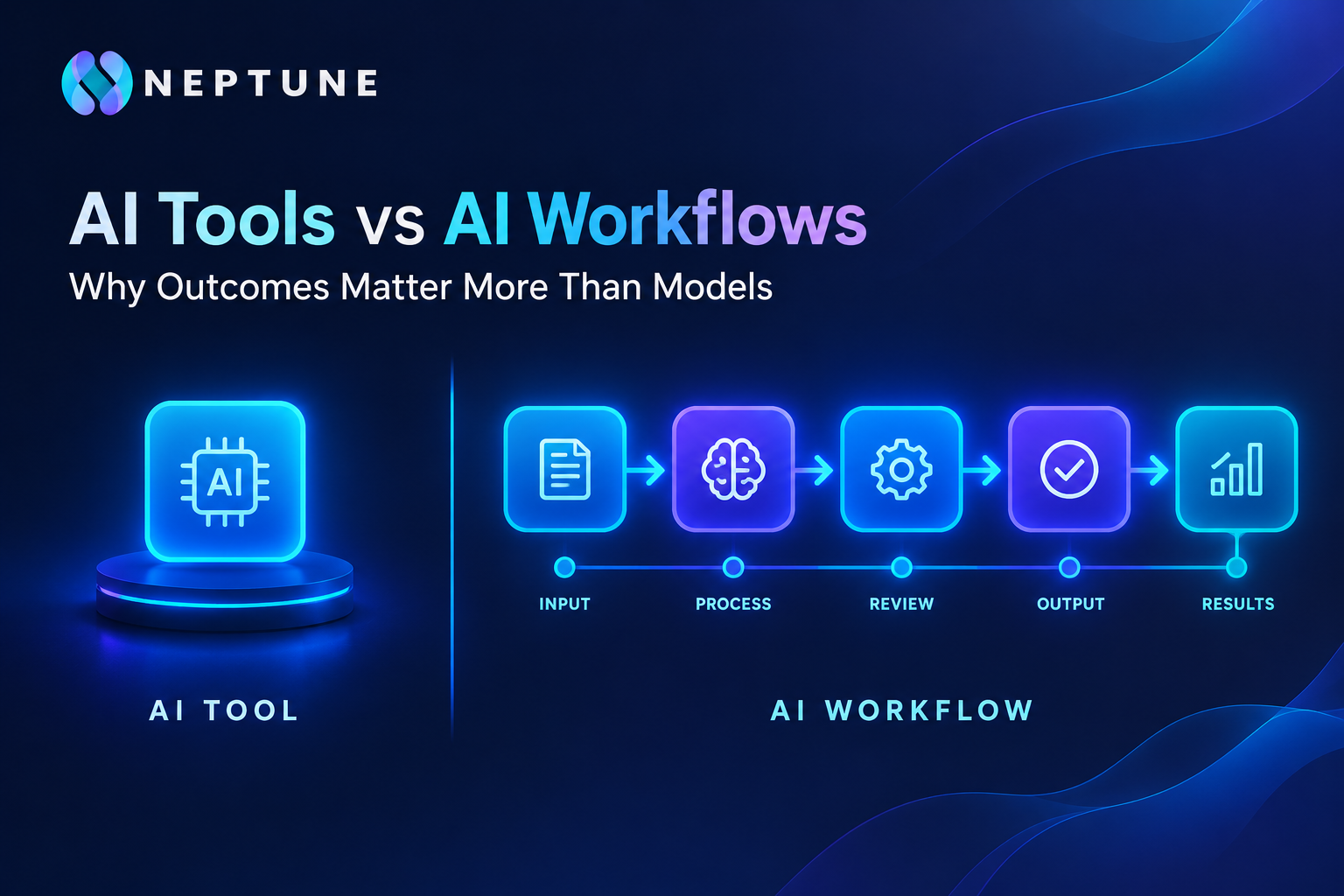
How it works:
- Define your business, products, and target audience.
- Identify potential competitors using public websites and industry sources.
- Group competitors by product category and market segment.
- Compare their main offerings and target customers.
- Create a shortlist of competitors for further analysis.
For example, a company offering AI productivity software may research project management platforms, AI assistants, and workflow automation tools.
This workflow creates a clear starting point for more detailed competitor analysis.
2. Competitor Keyword Gap Analysis
Keyword gap analysis helps businesses identify relevant search terms that competitors target but their own websites do not adequately cover.
AI can organize keyword data into related topics and help prioritize potential content opportunities. SEO tools provide the ranking information needed to validate these findings.
Steps to follow:
- Enter your website and relevant competitor domains into an SEO research tool.
- Export keyword rankings and available search metrics.
- Use AI to group keywords by topic and search intent.
- Identify relevant keywords that your website is missing.
- Prioritize opportunities based on business relevance and ranking difficulty.
For example, an AI automation company might explore topics such as AI workflow automation, automated market research, and competitor analysis tools.
These keyword ideas should be validated using an SEO platform before content is published.
3. Competitor Content Analysis Workflow
Competitor content analysis helps businesses understand what competing websites publish and how their content addresses customer questions.
AI can compare blog posts, landing pages, guides, and FAQs to identify missing information and opportunities to create more useful content.
A typical workflow includes:
- Collecting relevant competitor URLs.
- Reviewing page titles, headings, and main topics.
- Identifying questions answered by competing articles.
- Comparing competitor content with your existing pages.
- Creating content briefs based on the identified gaps.
For example, if competing articles explain AI automation at a basic level, your business could publish a more detailed guide with practical examples, implementation steps, and limitations.
The goal is to provide original value rather than copy competing content.
4. Competitor Pricing and Product Comparison
Understanding competitor pricing and product features can help businesses improve their market positioning.
AI can organize publicly available information into comparison tables covering product features, pricing plans, integrations, target audiences, and limitations.
How to build this workflow:
- Collect information from official competitor websites.
- Record prices, features, and product details.
- Use AI to organize the information into consistent categories.
- Compare the differences between competing products.
- Verify the findings and identify opportunities for differentiation.
For example, one competitor may focus on affordability, while another emphasizes advanced features or ease of use.
These insights can help businesses communicate their own value more effectively.
5. Customer Review and Sentiment Analysis
Customer feedback provides valuable information about what buyers like and dislike about competing products.
AI can organize public reviews into categories such as pricing, customer support, usability, reliability, and missing features.
A practical workflow involves collecting relevant reviews, grouping recurring themes, identifying common complaints, and checking representative examples.
For instance, if customers frequently complain about a complicated setup process, a competing business may have an opportunity to emphasize simple onboarding and better support.
However, reviews may not represent every customer. Businesses should treat sentiment analysis as useful evidence rather than a complete picture of customer satisfaction.
6. Market Trends and Opportunity Analysis
Market analysis involves understanding broader industry changes, customer expectations, emerging technologies, and potential business opportunities.
AI can summarize credible industry reports, public announcements, and relevant articles. It can then organize findings into trends, opportunities, and risks.
A useful process includes:
- Define the market or industry you want to analyze.
- Collect information from credible sources.
- Use AI to summarize key developments.
- Compare findings across multiple sources.
- Identify possible opportunities and risks.
- Prepare a report with supporting evidence and recommended actions.
For example, a software company might investigate growing interest in automated reporting or AI-powered business research.
AI can help identify patterns, but businesses should validate important conclusions before making strategic investments.
7. Automated Competitor Monitoring
Competitor research becomes more valuable when businesses repeat it regularly.
An automated monitoring workflow can help track changes to public pricing pages, product features, blog content, and marketing messages.
How it works:
- Select the competitors that matter most to your business.
- Decide which information needs regular monitoring.
- Schedule checks using suitable monitoring or automation tools.
- Compare new findings with previously collected information.
- Use AI to summarize meaningful changes.
- Share the findings with the relevant team.
This process helps businesses stay informed without repeating the entire research process manually.
How AI Helps With Keyword Research and Content Gaps
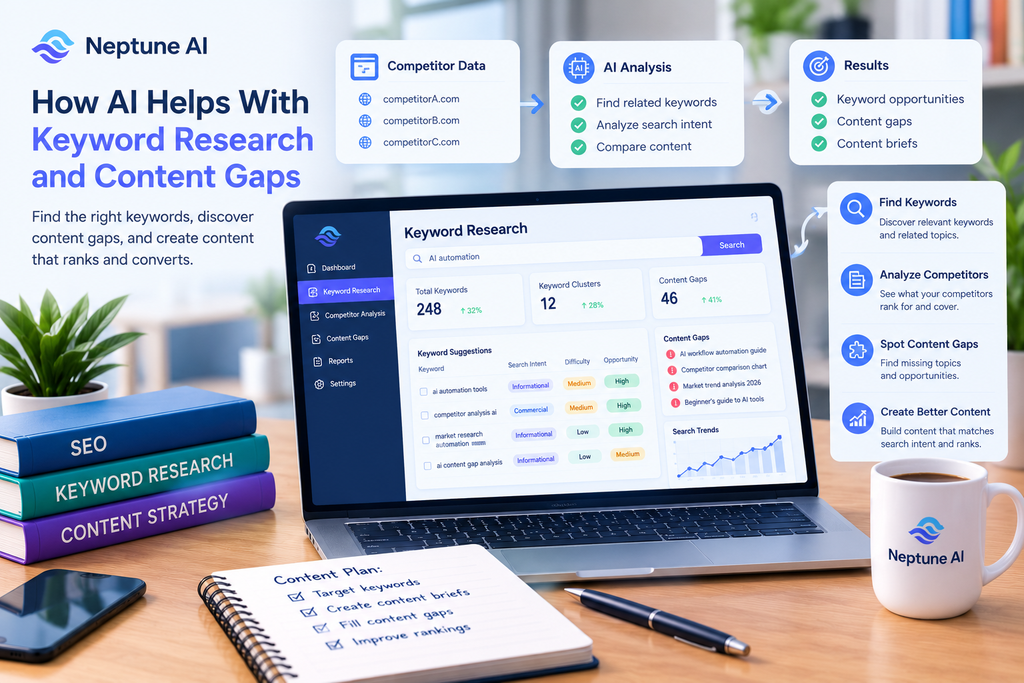
Keyword research connects competitor analysis with SEO content planning. AI can help organize large keyword lists, identify related search themes, and suggest topics that deserve further research.
For accurate results, businesses should combine AI analysis with data from specialist SEO tools.
Primary and Secondary Keywords
The primary keyword for this article is AI workflows for competitor research.
Relevant secondary keywords include:
- AI competitor research tools
- Competitor analysis with AI
- AI-powered market analysis
- Competitor keyword gap analysis
- AI market research workflows
- Automated competitor monitoring
- SEO competitor analysis
- Competitive intelligence automation
- AI content gap analysis
- Market research automation
These keywords are closely related to the article’s topic. Their search volumes and difficulty scores should be checked before finalizing the SEO strategy.
Understanding Search Intent
Keyword relevance is important for attracting the right audience.
Businesses should focus on informational searches from readers who want to understand competitor research, commercial searches from people comparing AI tools, and practical searches from users looking to automate research tasks.
Content should answer these questions directly and provide useful steps rather than simply repeating keywords.
Best AI Tools for Competitor Research
Different tools support different stages of competitor research. Choosing the right combination depends on your business goals and budget.
Semrush
Semrush supports SEO competitor analysis, keyword research, organic search insights, and content planning. It can help businesses discover keyword opportunities and evaluate competing websites.
Website: https://www.semrush.com/
Ahrefs
Ahrefs provides tools for keyword research, competitor website analysis, backlink research, and identifying top-performing pages.
Website: https://ahrefs.com/
Similarweb
Similarweb provides digital market intelligence, estimated website traffic data, and audience insights. These features can help businesses compare online market presence.
Website: https://www.similarweb.com/
ChatGPT
ChatGPT can help summarize research, organize keyword lists, compare product features, classify customer feedback, and prepare structured reports using supplied information.
Website: https://chatgpt.com/
Neptune AI
Neptune AI can be explored for AI workflow possibilities that support structured business processes. Depending on available platform features and integrations, businesses can investigate ways to organize research, analysis, and reporting into repeatable workflows.
Website: https://neptuneai.live/
Combining specialist research tools with AI analysis can provide a more complete process than relying on a single tool for every task.
How to Build an Effective Competitor Research Workflow
A successful AI workflow should have a clear objective, reliable data, and a defined outcome.
Step 1: Define Your Research Goal
Decide what you want to achieve. Your objective might be finding keyword opportunities, comparing competitor products, understanding customer needs, or monitoring market changes.
Step 2: Collect Reliable Information
Gather relevant information from public websites, official product pages, SEO platforms, customer reviews, and industry reports.
Step 3: Analyze the Data With AI
Use AI to summarize findings, organize information, compare competitors, and identify patterns.
Step 4: Verify Important Findings
Check prices, statistics, keyword metrics, and other factual claims against original sources. Correct inaccurate information before using the report.
Step 5: Create an Action Plan
Turn your research into practical tasks, such as publishing a new article, improving an existing landing page, or reviewing your product positioning.
Step 6: Review and Improve
Repeat the workflow regularly and adjust it as your market, competitors, and business objectives change.
Following these steps helps businesses turn competitor research into a repeatable process rather than a one-time activity.
Common Mistakes to Avoid
Even a well-designed AI workflow can produce poor results if the underlying research is unreliable.
Relying on unverified AI output: Always check important claims against original sources.
Choosing irrelevant competitors: Focus on businesses that serve similar customers or compete for the same search terms.
Ignoring search intent: A keyword may have potential traffic but still be irrelevant to your products or services.
Copying competitor content: Use competitor research to identify gaps and create original, useful content.
Automating without human review: AI can make mistakes, misunderstand context, or draw conclusions from incomplete information.
Collecting data without taking action: Research should lead to practical recommendations and measurable business objectives.
Frequently Asked Questions
AI workflows for competitor research are repeatable processes that use artificial intelligence to organize and analyze information about competing businesses. They can support keyword research, content analysis, product comparisons, and market monitoring.
The best tool depends on your needs. Semrush and Ahrefs are useful for SEO research, Similarweb supports digital market intelligence, and ChatGPT can help analyze supplied data and prepare reports.
Yes. AI can group keywords, identify related topics, compare keyword lists, and suggest content opportunities. Search volumes and ranking metrics should be verified using reliable SEO tools.
Monthly reviews are a useful starting point for many businesses. Companies operating in fast-changing markets may need to monitor important competitors more frequently.
AI can summarize industry reports, analyze customer feedback, compare competitor offerings, and identify potential opportunities. Businesses should verify the evidence before making important decisions.
Yes. Small businesses can begin with public websites, affordable research tools, spreadsheets, and an AI assistant. Starting with a specific research question makes the process easier to manage.
AI workflows can identify keyword gaps, group related search terms, compare competing articles, and generate content briefs. These insights help businesses plan content around relevant topics and user needs.
Final Thoughts
The best AI workflows for competitor research and market analysis combine reliable data, structured analysis, and clear business objectives. From discovering competitors and finding keyword gaps to understanding customer feedback and monitoring market changes, AI can make research more organized and efficient.
However, successful competitor analysis requires more than automation. Businesses must verify information, understand their customers, and decide which opportunities align with their goals.
By building repeatable AI workflows, companies can transform competitor research into a practical process that supports smarter marketing, stronger SEO strategies, and better-informed business decisions.
Ready to Make Your Research Workflow Smarter?
Discover how AI-powered workflows can help organize research, simplify repetitive tasks, and turn information into actionable insights.
Explore Neptune AI to learn more about AI workflow possibilities and how structured automation can support your business processes.